Two different men
St. Jude and Judas Iscariot are not the same person
St. Jude is one of the twelve apostles. Judas Iscariot is the disciple who betrayed Jesus. They share a name in the Gospels, which is why devotion to Jude is sometimes misunderstood, and why the book introduces him carefully.
Why the names are confused
“Jude” is a short form of “Judas”, and the New Testament contains more than one man called Judas. In the lists of the twelve, one is Judas Iscariot and another is identified as Judas the son of James (Luke 6:16), sometimes rendered Jude. John’s Gospel is careful to specify “Judas, not Iscariot” when the other one speaks (John 14:22).
That careful note in John is the reason this question keeps coming up. Readers who hear about a devotion to St. Jude sometimes assume it involves the betrayer, and the confusion is old enough that the Gospel writers anticipated it.
The question in John 14
During the Last Supper, Jesus speaks about revealing himself to his disciples. Judas, not Iscariot, asks how this will happen and why not to the world (John 14:22). It is an honest question, asked out loud, in a room where the answer was not obvious.
The St. Jude Novena: A 9-Day Prayer Guide for Hopeless Cases treats that question as an example of honest inquiry. That framing is a large part of the book’s character: it makes room for the reader who wants to ask something rather than assert something.
General context: the passage sits in the farewell discourse, where Jesus speaks about preparing a place and about the Advocate. The question is not a rebuke; it is a disciple trying to understand what he has just heard.
A quiet presence in the Gospels
Jude appears in the lists of the twelve and in that single conversation in John. He is not the subject of a long narrative. The guide uses that quiet presence as a way to reflect on hidden faithfulness and overlooked struggles, which is a fitting theme for people whose situation nobody else has noticed.
That is a devotional reading, not a claim that the Gospels give an account of his life. The book keeps the two categories apart.
Scripture and later tradition
Devotion to Jude as the saint associated with hopeless cases is a later tradition. It is not something the Gospels state. The guide distinguishes scriptural accounts from later traditions, giving readers context for how that devotion developed.
This distinction is worth holding while you pray. It means the novena rests on the practice of asking a saint to pray with you, not on a claim that scripture promised a particular outcome.
Questions readers ask
Is St. Jude the patron saint of lost causes?
Devotion to Jude is widely associated with hopeless cases and lost causes. That association belongs to later tradition rather than to the Gospel accounts, and the book presents it that way.
What does John 14 contribute to Donnelly’s guide?
Jude’s question to Jesus becomes the guide’s model of honest inquiry: asking plainly, in the middle of something you do not understand, rather than waiting until you have no questions left. The biblical passage is kept distinct from later devotional practice.
Why pray to a saint at all?
Catholic practice asks saints to pray for us; it does not treat them as the source of the answer. The book’s glossary explains intercession in those terms, which is useful if the vocabulary is unfamiliar.
Does the book claim Jude wrote part of the Bible?
The site makes no such claim on the book’s behalf. It describes what the book does: it introduces Jude as an apostle, considers his question in John 14, and separates scriptural accounts from later traditions.
How to pray a St. Jude novena or prayer when nothing changes.
Keep reading
- How to pray a St. Jude novenaWhat a novena is, what you need to begin, and how the nine days are usually prayed.
- Prayer when nothing changesPraying while a situation stays unresolved: persistence, surrender, grief and waiting.
- Returning to Catholic prayerA welcoming starting point for anyone coming back after an absence, or unsure in church.
- Journal prompts and intentionsHow to name an intention plainly, write through a novena, and use a Kindle with a notebook.
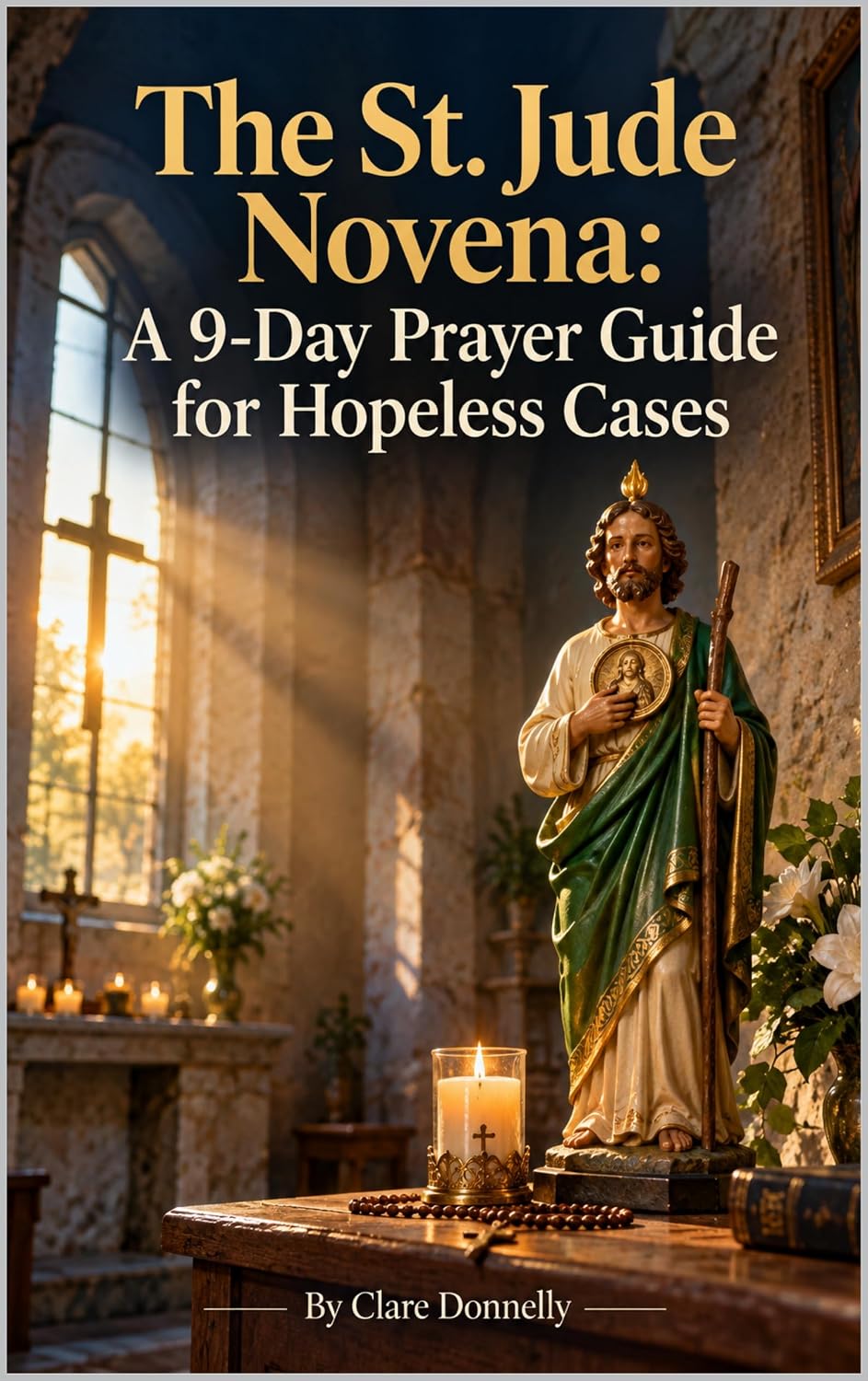
The book
An apostle for the overlooked case
Nine days that introduce Jude, consider his question in John 14, and make room for honest inquiry when the answer is not obvious.
The St. Jude Novena: A 9-Day Prayer Guide for Hopeless Cases
by Clare Donnelly
The listing on Amazon is the only place to buy the book.